

When I started investing for my kids in 2019, I had a very specific need: put CHF 100 per month into an ETF, nothing more. With a typical Swiss broker charging CHF 10 to 15 minimum per transaction, that meant losing 10-15% of each investment in fees. Ridiculous.
I was already using Interactive Brokers for my personal investments, but I wanted to test the best European broker so I could write about it on the blog. DEGIRO was the obvious choice, and I used it for five years.
The result: near-zero fees, a simple interface, and zero bad surprises. Here’s my full review based on those five years of use.
As a reminder, here are the criteria I use to evaluate an online broker:
- Accessibility as a Swiss resident
- Stable and durable over time
- Protection of my assets
- Access to international markets
- Product availability
- Available tools
- Fees (best for last!)
Let’s see how DEGIRO scores on each of these.
1. Is DEGIRO accessible to Swiss residents?
Yes. DEGIRO accepts Swiss residents and offers an account with a CHF IBAN. You can fund your account via a standard bank transfer from your Swiss bank, just like you would for any other recipient.
The interface is available in four languages for the Swiss market: English, German, French, and Italian. No need to navigate in Dutch ;)
On the support side, DEGIRO offers:
- A dedicated email: clients@degiro.ch (available 24/7)
- A Swiss phone number: +41 435 086 329 (Monday to Friday)
For an online broker based abroad, that’s a real plus, because it’s reassuring when you’re just starting out with stock market investing. Personally, I only had to contact them once in five years (to ask if the recurring automatic purchase feature was coming soon… that was back in 2021 ;)). And the reply came within a few days.
2. Is DEGIRO safe and stable over time?
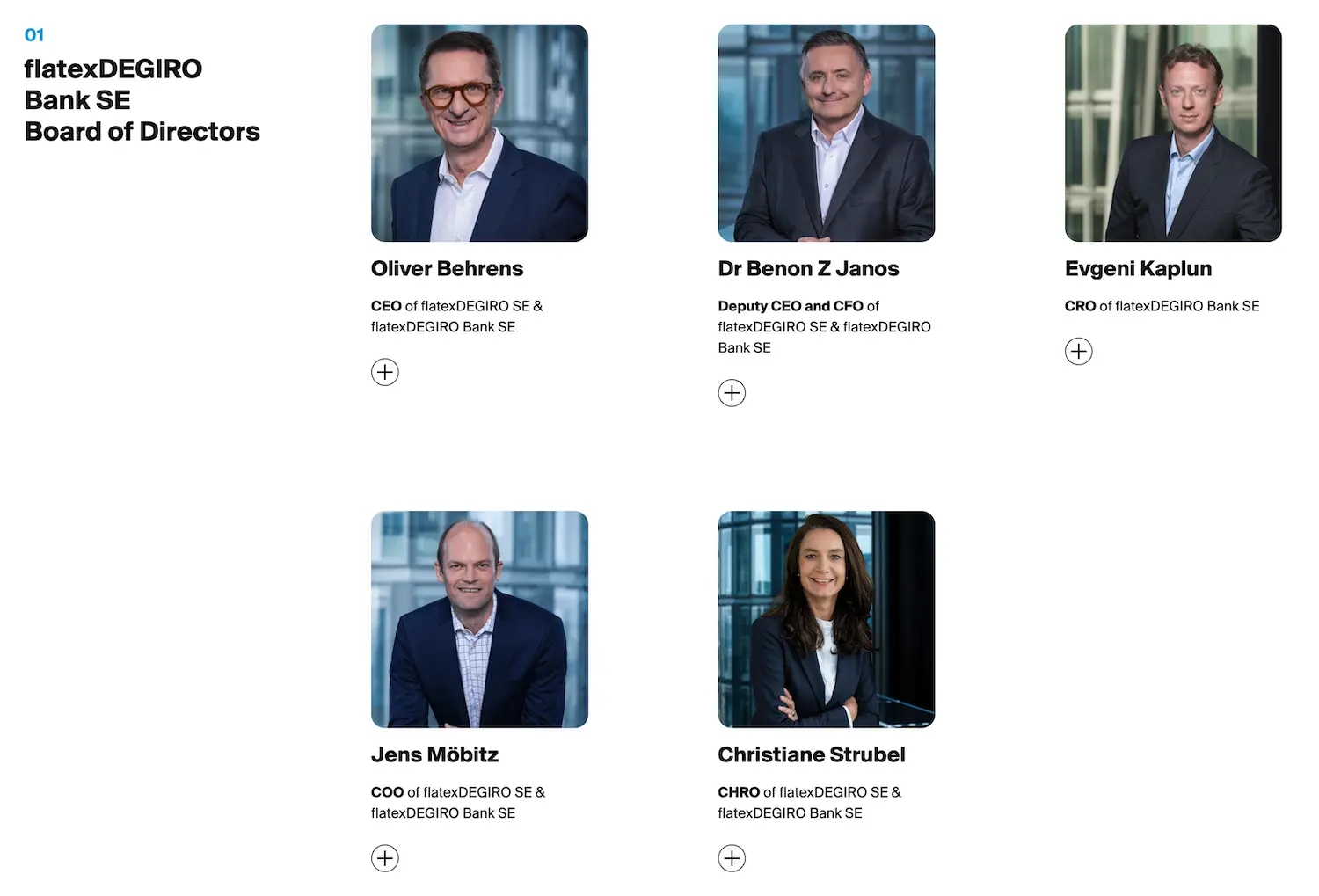
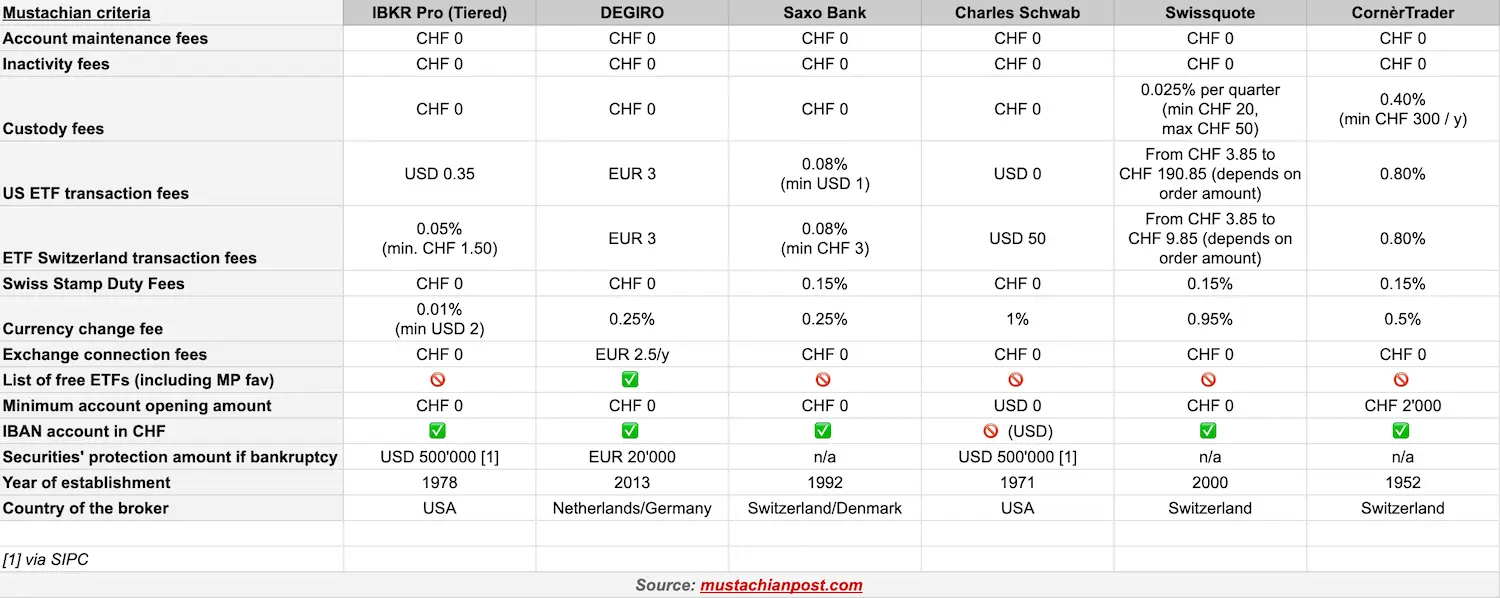
DEGIRO was founded in 2013 in Amsterdam by former Binckbank employees. In 2020, they merged with flatex to form flatexDEGIRO AG, a group listed on the Frankfurt stock exchange. That stock exchange listing matters: it means the accounts are publicly audited, and anyone can access the group’s financial reports.
So DEGIRO’s employees (aka flatexDEGIRO AG) can’t do whatever they want without it becoming visible pretty quickly.
flatexDEGIRO manages over 3 million accounts across Europe and is supervised by two regulators: BaFin (the German Federal Financial Supervisory Authority) and the DNB (the Dutch central bank). For a European broker, that’s solid from a regulatory standpoint.
Now, let’s address something: in December 2022, BaFin fined flatexDEGIRO 1'050'000€ for shortcomings in compliance and internal controls. The group had to inject 50 million euros in additional capital to strengthen its equity.
And they received another fine of 560'000 euros in December 2025 for misleading advertising about “free” investments (dating back to 2022). I found out because, as a blogger, they were quick and strict about making sure we referred to “extremely low fees” and not zero fees.
Since then, corrective measures have been implemented, and BaFin has not flagged any new issues.
Did that worry me? Honestly, yes, a little. I even wrote a blog post about it: DEGIRO BaFin investigation (late 2023): things are heading in the right direction.
But I looked at the facts: the fine was about internal processes, not client fund losses. The group fixed the issues and strengthened its capitalization. This is the kind of situation where a regulator does its job, and it’s actually reassuring to see the system working. So I see it as a positive.
And if my kids weren’t almost old enough to manage their own money (something I want them to learn on IBKR), I’d still have a DEGIRO account for them.
3. Is my money safe at DEGIRO?
Your securities (ETFs, stocks, bonds) are held in a separate legal entity from DEGIRO. If the broker goes bankrupt, those securities remain your property. It’s the same segregation principle you find with most regulated brokers.
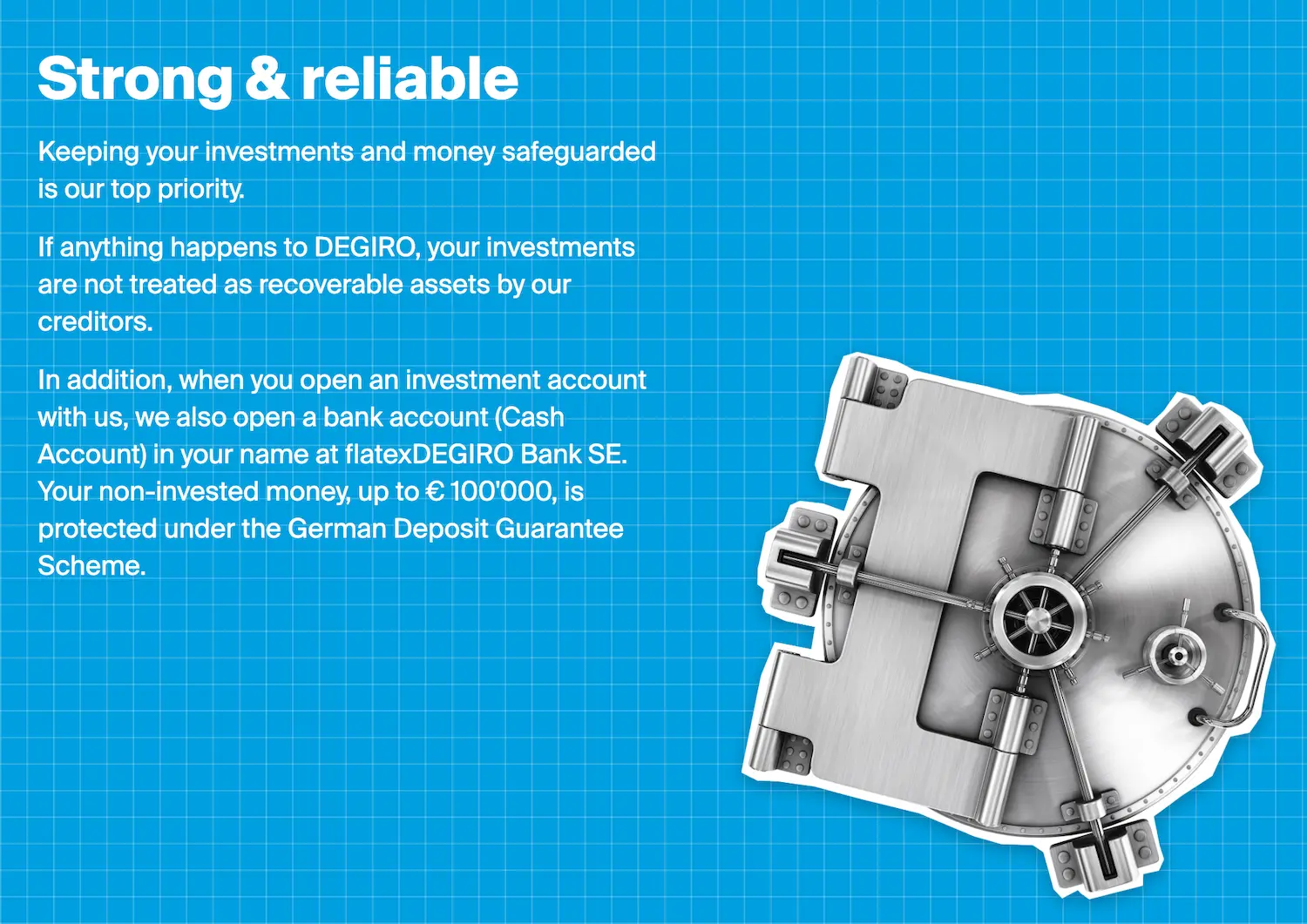
For the cash in your account, you’re covered by the German deposit guarantee up to 100'000 euros. And for your securities, the German investor compensation scheme (Anlegerentschädigungsgesetz) covers you up to 90% of your securities’ value, with a cap at 20'000 euros (in case of broker fraud, for example).
Compared to Interactive Brokers’ SIPC protection (USD 500'000), that’s significantly less generous. It’s something to keep in mind if you plan to build up a large portfolio. But for most investors who are just starting out or investing a few hundred francs per month, the protection is more than enough.
One last point: DEGIRO used to enable a securities lending program (“Securities Lending”) by default, where your securities could be lent to other market participants. Since October 2025, this program has become optional. If you don’t want your securities to be lent out, you can simply disable the option in your account settings. I mention this because it stressed me out at first, so it’s nice that it’s no longer mandatory when you start investing (even though it’s a well-regulated system).
4. Can I trade on international markets?
DEGIRO gives you access to over 50 stock exchanges across 30 countries. That’s more than enough for a Mustachian investor buying one or two ETFs, but also for those who want to diversify with value stocks (read: How to start value investing (10%+ expected return)).
Here’s an overview of the available markets:
Europe: Netherlands, Germany, France, United Kingdom, Belgium, Ireland, Switzerland, Austria, Spain, Portugal, Italy, Denmark, Finland, Norway, Sweden, Greece, Poland, Czech Republic, Turkey, Hungary
North America: United States (NYSE, NASDAQ, AMEX, ARCA), Canada (TSX, TSXV)
Asia and Oceania: Japan (TSE), Hong Kong (HKEX), Singapore (SGX), Australia (ASX)
Small detail to know: DEGIRO charges 2.50€ per year per foreign exchange you connect to. If you only buy on a single exchange (Euronext Amsterdam for the VWRL ETF, for example), that’s 2.50€ per year total. Not a big deal, but good to know.
5. Product availability
On this point, you need to be aware of one important limitation: DEGIRO does not give access to US-domiciled ETFs.
Why? Because of the European PRIIPs regulation, which requires a “Key Information Document” that meets European standards (KID). Vanguard doesn’t provide this document for its US ETFs (like the VT). And unlike Interactive Brokers, which treats Switzerland as a special case, DEGIRO applies the European PRIIPs rule to all its clients, Swiss ones included…
In practice, this means you can’t buy the VT ETF (Vanguard Total World Stock) directly. Instead, you buy its European equivalent: the VWRL (or VGWL, which is the exact same fund but listed in EUR on the German Xetra exchange). I explain the difference between the two and how to pick the right one in the dedicated chapter: How to buy the VWRL ETF on DEGIRO in 2026.
Beyond this restriction, DEGIRO offers a wide range of products: stocks, ETFs, bonds, options, futures, and warrants. For a Mustachian investor focused on one or two global ETFs, that’s more than enough.
Another plus: DEGIRO offers a “Core Selection” of popular ETFs (including the VGWL) where transaction fees are only 1€ per order.
6. What tools does DEGIRO offer?
If you’re coming from Swissquote or Interactive Brokers with some of their chart-heavy platforms, DEGIRO will feel… minimalist. And that’s actually one of DEGIRO’s strengths for a Mustachian investor.
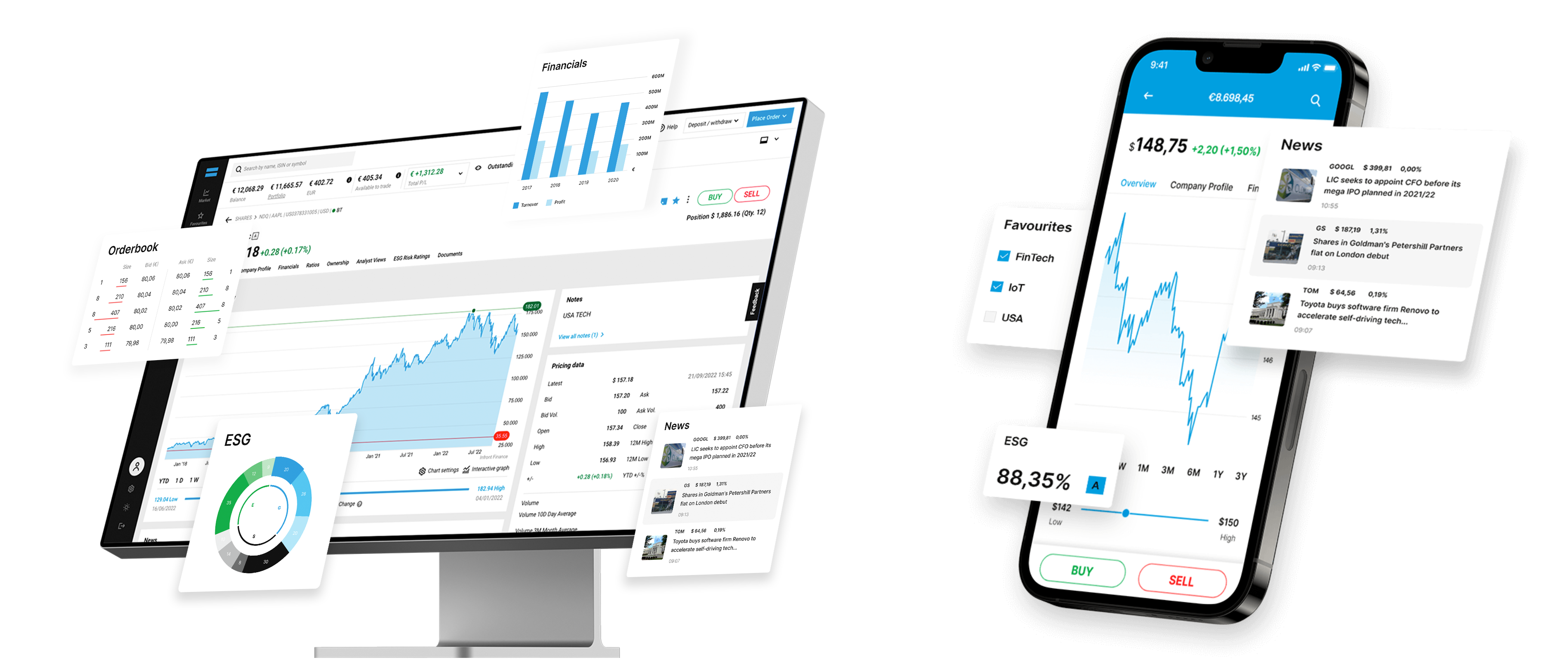
DEGIRO offers two interfaces to access its platforms:
- Web platform: clean, streamlined, with everything you need to search for a security, place an order, and track your portfolio. No bells and whistles, no day-trader charts. You find your ETF, click, buy. It’s designed for the investor who wants to keep things simple.
- Mobile app (iOS and Android): same logic as the web version, adapted for smartphones. Handy for checking your portfolio on the go or placing a quick buy.
What I like: the simplicity. When I was buying an ETF for the kids every month, the whole operation took less than 3 minutes, from login to order confirmation.
What’s missing: no advanced analysis tools (like PortfolioAnalyst on Interactive Brokers), and the tax reports are basic (as with other foreign brokers, you don’t get an electronic tax statement for your Swiss tax return). But honestly, it works just fine for a Mustachian investor with a long-term perspective.
7. What are DEGIRO’s fees?
This is where DEGIRO really shines. As I explain in detail in my best broker comparison for Swiss investors, fees are often what makes the difference in the long run.
Here’s the breakdown:
Custody fees
CHF 0. No custody fees, management fees, or inactivity fees. Your account can stay open at no fixed cost, even if you don’t make a single transaction for months.
Transaction fees
This is DEGIRO’s big advantage. For ETFs in the Core Selection (including the VGWL), you pay only 1€ in handling fees per transaction. No percentage, no hidden minimum. Whether you invest 100 euros or 10'000 euros, it’s 1 euro.
For other ETFs and stocks outside the Core Selection, it’s 3€ per transaction. Still very competitive compared to other brokers.
Currency conversion fees
DEGIRO applies an automatic exchange rate (“AutoFX”) with a 0.25% commission on the converted amount. You can’t do manual conversions like with Interactive Brokers. It’s a bit more expensive than IB’s 0.002%, but it’s still well below what traditional Swiss banks charge.
Connectivity fees
2.50€ per year per foreign exchange used. If you only buy VWRL on Euronext Amsterdam or VGWL on the German Xetra exchange, it’s 2.50€ per year per exchange.
Account opening fees
CHF 0.
Account closing fees
CHF 0.
Incoming transfer fees
CHF 0.
Outgoing transfer fees
CHF 0.
Swiss stamp duty
CHF 0. Since DEGIRO is a broker based outside Switzerland, you don’t pay the Swiss stamp duty of 0.15% per transaction on foreign securities. On a portfolio that grows over the years, that’s a significant saving.
Fee summary for a Mustachian investor
Let’s take a concrete example: you invest CHF 500 per month in the VGWL ETF through DEGIRO.
- Transaction fees: 1€ (Core Selection)
- Connectivity fees: 2.50€ / 12 = ~0.21€ per month
- Currency conversion fees: 0.25% of CHF 500 = ~CHF 1.25
- Custody fees: CHF 0
- Stamp duty: CHF 0
Monthly total: about CHF 2.50. That’s 0.5% of your investment. And that percentage drops as your contributions increase.
Conclusion
DEGIRO is the best broker if you want one based on European soil and you want to minimize your fees as much as possible (including through the trick of not paying Swiss stamp duty).
The only major downside is that you don’t get access to US-domiciled ETFs, including the highly diversified VT ETF (the VGWL/VWRL is the closest alternative, and it only holds about half the number of companies).
Also, securities protection is lower than in the US. But for a Swiss investor looking for a European broker with rock-bottom fees, it’s the best option I know of.
I used it for five years for my kids’ investments, with zero bad surprises. If you’re in a situation where you want to invest monthly in a global ETF without getting crushed by fees, and you’re comfortable with a broker based in Europe rather than in Switzerland or the US, DEGIRO gets the job done.
In the next chapter, I walk you through how to open your DEGIRO account step by step, with screenshots.