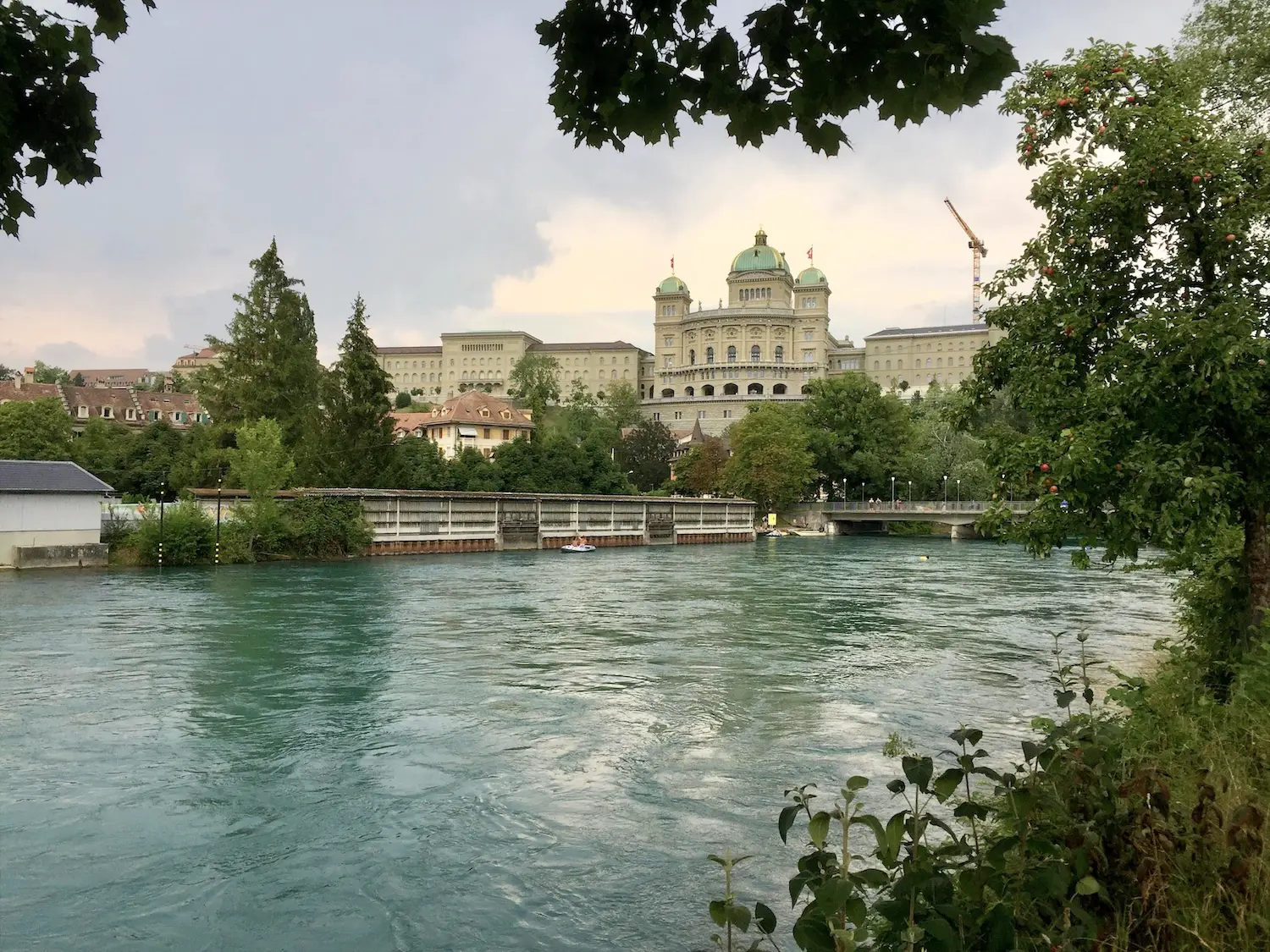
Crossing the Röstigraben, and discovering financial independence
I’m in my thirties and I grew up in the western suburbs of Lausanne. For the past ten years or so, I’ve been working in Bern, our picturesque federal capital. My wife and I have been together for 7 years, and we’re now looking at buying a property and starting a family.
Chance can be surprising. Nothing, and certainly not my German skills, made me likely to cross the Röstigraben, let alone settle there for good. In the same way, neither my social background nor my personal interests pointed to a growing interest in money matters, and even less in financial independence. But life holds nice surprises, and it’s up to us to create them and grab them.
Pocket money, CHF 60 jeans and free club entries
I became aware of how to handle money, and what it’s worth, pretty early in childhood. It started with pocket money that I had to manage on my own for my “fun” purchases.
My parents covered the other expenses (clothes, school fees, and so on) as long as they stayed within a certain amount, and a certain frequency.
So if I’d wanted to buy a pair of jeans at CHF 200, my parents would have agreed to pay what a pair of jeans normally costs in a big store, probably CHF 60, and I would have had to cover the difference myself.
My parents managed their money consciously, and that’s what led me to a fairly frugal lifestyle.
I can still picture my father on holiday, writing down the daily purchases in a small notebook to keep an overview of what we spent each day and in total.
As for me, I refused on principle to take on any fixed expense, like a phone plan, until I had a fixed salary.
Since I had CHF 200 of pocket money per month after I turned 18, I came up with strategies to optimize my spending.
The examples that come to mind are:
- free entry to nightclubs. I was a regular night owl for several years, and I only ever paid for entry once
- sticking to one non-alcoholic drink
- and free parking spots in certain neighborhoods of Lausanne.
Every little bit adds up, and my thrifty streak meant I could cover all my “fun” needs using only my monthly pocket money.

From my teenage years onwards, I also had the chance to work in microelectronics, first during the summer holidays, then about 8 hours a week, at roughly CHF 18 to 20 an hour.
Those saved earnings, plus the money I got as gifts for special occasions, grew my savings account to a not insignificant few tens of thousands of francs by my early twenties.
Today, our freely invested net worth is close to a million francs.
CHF 7'000 a month, and savings that sleep
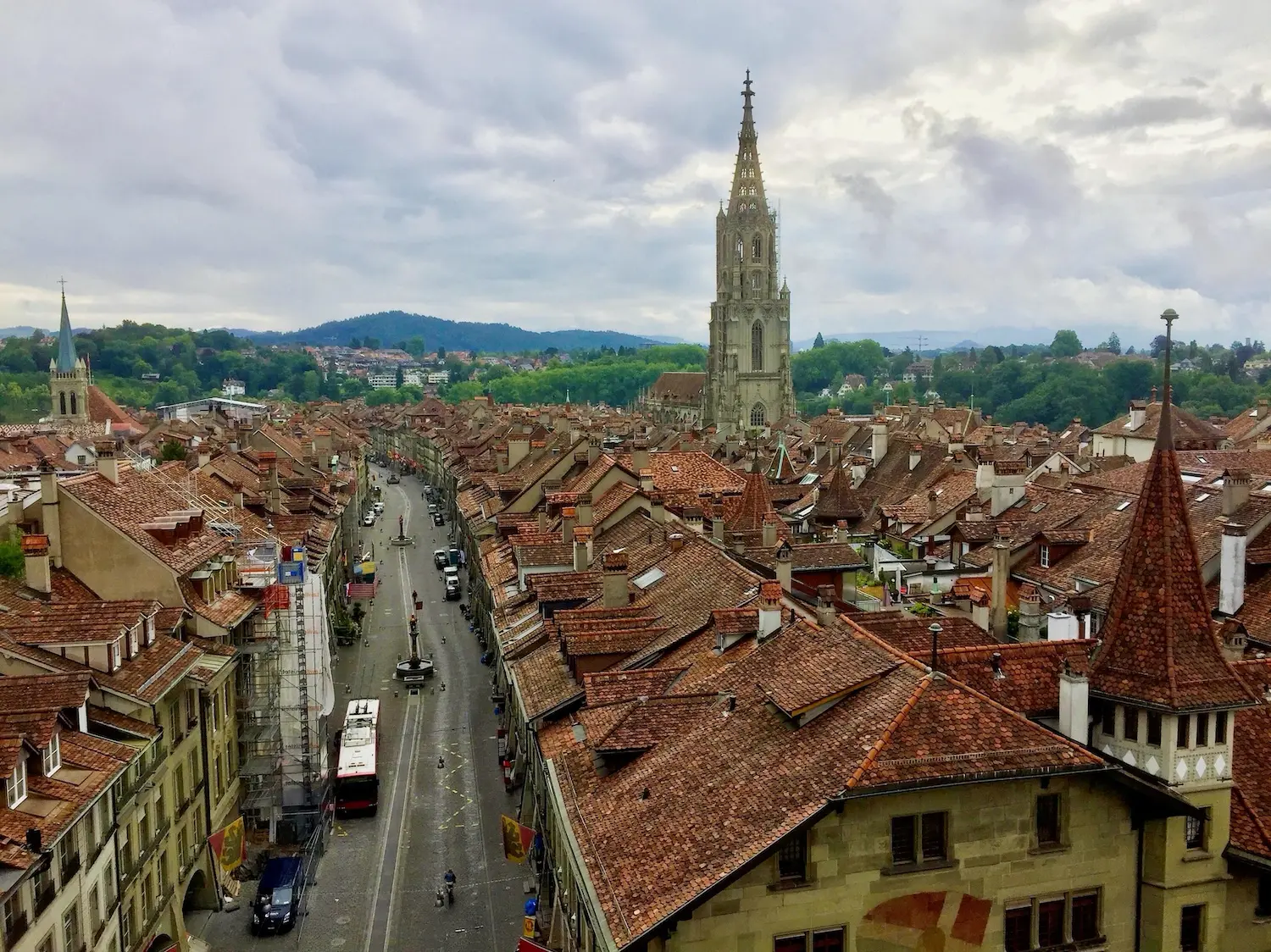
My savings kept sleeping peacefully in my savings account when I finished university and landed my first full-time paid job in Switzerland, at a federal institution based in Bern, for a monthly salary of nearly CHF 7'000.
I stayed frugal, because a habit doesn’t take any effort to maintain, so I initially put aside around 25 to 30% of my salary in those first years, without really having a budget or paying much attention to my spending.
I remember comparing some big purchases I wouldn’t make today, like buying a wardrobe for nearly CHF 3'000, against my usual savings rate. I told myself that either way, the money I didn’t save would just pile up in my savings without any real purpose, and without earning anything, since interest rates were close to nonexistent.
The idea of financial independence wasn’t even part of my vocabulary… To live, you have to work. And you have to work in order to live. Period.
The trigger: a move, a budget, and Marc’s blog
After the first three years, and the fun purchases you make when you get a salary for the first time, my savings rate went up to nearly 40% in 2018 and 2019.
It then stabilized from 2020 on, with an upward trend, because my salary increases and the dividends I collect mostly go into growing my savings rather than my spending. More on that below.
Over a decade, my income has grown by nearly 60%, partly thanks to the years of experience I built up, and partly from 2020 on, after a change of role followed by a broader set of responsibilities.
That progression, along with bonuses averaging CHF 2'000 a year, depended on hitting targets that went beyond my job description.
But the income from our dividends, nearly CHF 20'000 in 2025, is what struck me the most psychologically. Our savings generate it passively, without us doing anything.
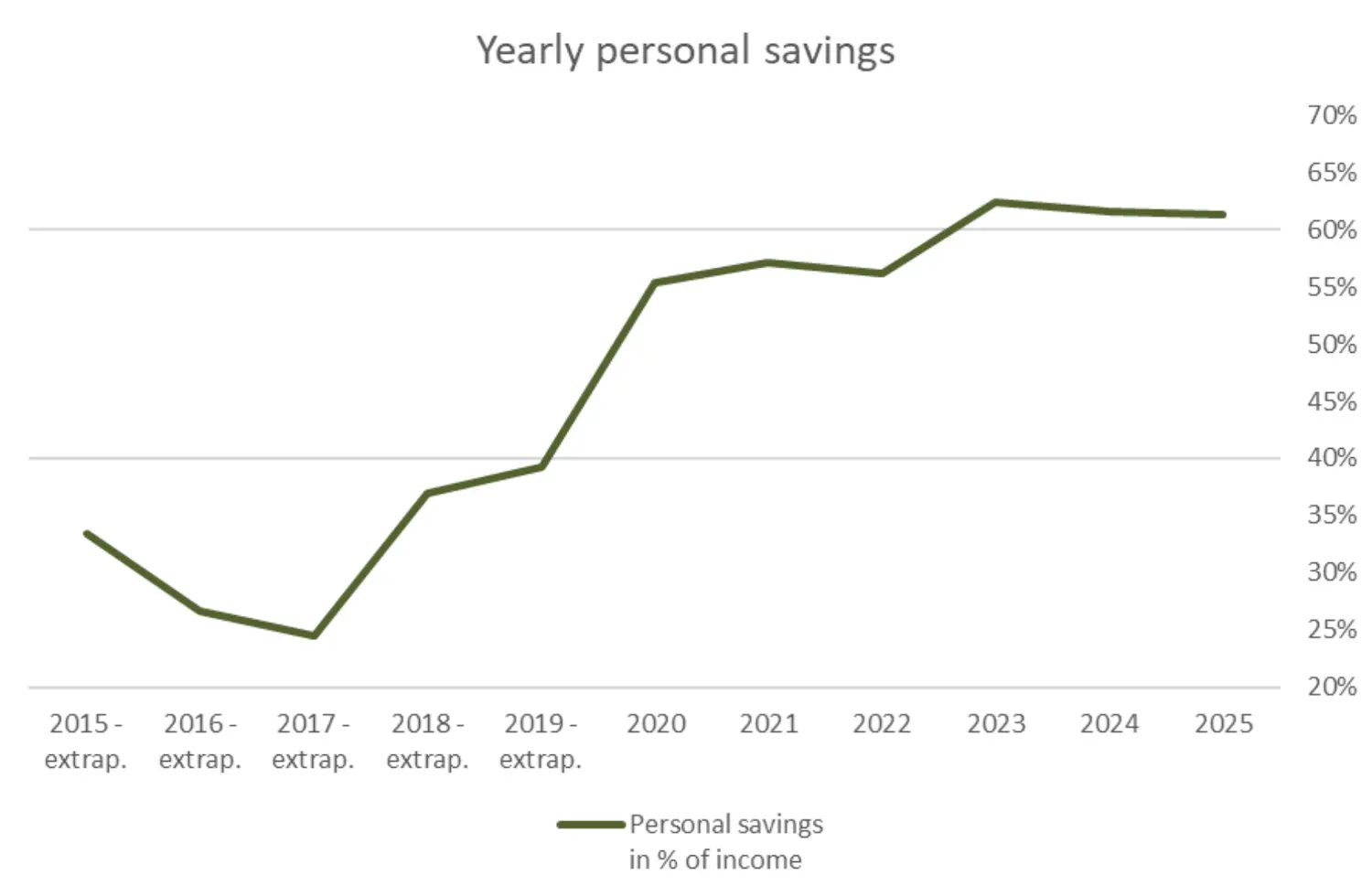
Savings made between 2015 and 2025 (up to 2019: extrapolated from my income and my bank accounts, since I wasn't tracking my spending back then)
At the end of 2019, our move raised the question of how to split shared expenses… 50-50, proportional to income, something else? And also the practical side: account, credit cards, and so on.
That’s when it seemed worth going back to building a budget with distinct spending categories, so we’d keep a complete overview.
I also started wondering whether my savings could come out of their banking slumber and actually grow.
After some research, I quickly landed on Marc’s site, then I dove into reading his articles.
And just as the partial Covid lockdown started shaking up our well-organized lives, I made my first investments:


Contrary to what I’ve often read, the gap between learning about the financial side and actually acting on it was short, probably because I’d read a lot of articles and because I find this topic easy to grasp.
The stock that lost 99%, and what it taught me
I split my first investments into three approaches:
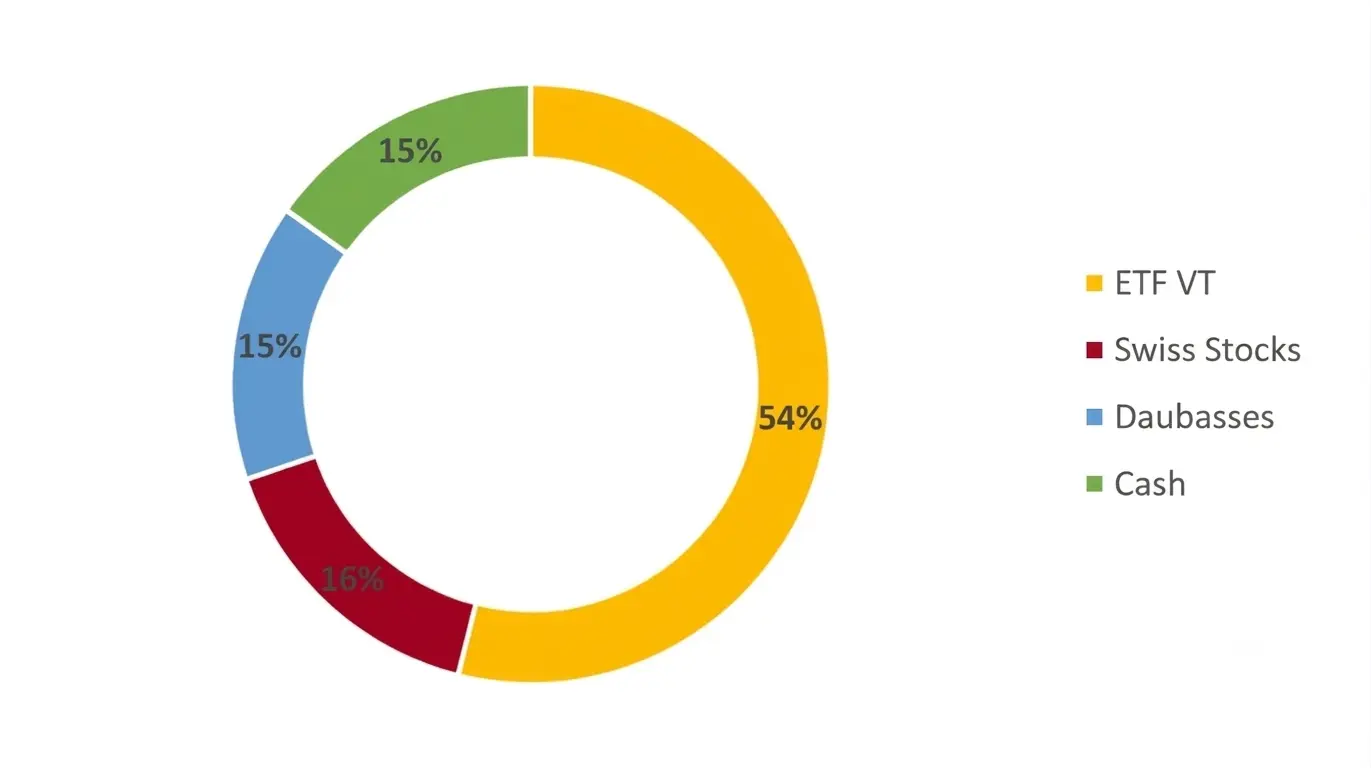
- Swiss stocks with a high dividend
- Value stocks analyzed by the Daubasses
- The VT global index fund
For the first category, I was lucky enough to benefit in part from the global stock crash of April 2020. Since then I’ve mostly held on to those Swiss stocks, mainly for their dividends, and I’m thinking about trimming some positions in 2026 to lock in part of the unrealized gains.
Until mid-2021, I also did quite a few buys and sells based on analyses and trends I picked up in my online reading. I held those positions anywhere from a few days to several weeks. The gains came partly from a general rise in stocks and partly from luck, since as the saying goes, an investor who’s right six times out of ten is already excellent.
I eventually realized that:
- luck played a significant role
- my gains didn’t beat the market on average
- the time investment wasn’t negligible, and wasn’t especially stimulating intellectually
- and the gain-to-loss ratio wasn’t all that attractive…
One of the stocks I bought as a “test”, using the CHF 1'000 gain I’d made on another trade, has since lost 99% of its value. I’ve kept it as a reminder that while fortune favors the bold, you also need to stay humble in front of markets and company valuations that are very hard to predict and not very rational.
For an average investor, picking those stocks involves a big dose of luck.

Why I stopped picking my own stocks
From mid-2021, I completely stopped buying individually picked stocks in favor of a single monthly investment in the VT index fund (short for “Vanguard Total World Stock ETF”).
Until the end of 2022, I also diversified my portfolio through the Daubasses site, which I discovered in How to start value investing.
Here too I made some nice gains, helped by a rising market, but also some losses that kept my feet on the ground.
Since 2023, I’ve gradually reduced my value investing, limiting myself to reinvesting the proceeds from selling stocks flagged by the Daubasses analyses, either into stocks I already own or into new ones. Marc’s article I’m not Value Investing with The Daubasses anymore echoes my own experience.
So since the start of 2025, I limit myself to reinvesting part of the dividends from the Daubasses stocks I hold, mostly Japanese and European companies.
I reinvest the rest of the dividends, along with the Daubasses stocks sold according to their process, into the VT global index fund.
VT’s performance is still carried by a bull market, and by the risk of a speculative bubble tied to all the enthusiasm around artificial intelligence.
But since I have no ability to predict the future, I keep following my process: buying between 60 and 80 VT shares every month.
Dividend growth in 2025 is disappointing, because the Swiss franc appreciated against the dollar, but I keep in mind that this strategy isn’t about maximizing my passive income, which is heavily taxed in Switzerland anyway. It’s about the value going up along with the market overall.
It’s still especially nice to see that you can make money while sleeping, or while doing things you actually enjoy 🙂
On a related note, hedging against a falling dollar, something certain finance people are pushing right now, would be an expensive insurance policy and not very relevant over a horizon longer than ten years.
Right now, here’s how we split our freely invested net worth:
Making the invisible visible: 10 minutes of budgeting a week
As I dug into investing from 2019 on, I also developed a strong interest in personal finance. That new interest helped me become aware of my own behavior and my tendency to be fairly frugal out of habit, and to think through what could help me make more rational choices and limit outside influence.
Three things helped me.
My budget in 10 categories
First, building a budget to make the invisible visible, meaning all the spending, small and large, across 10 categories that fit my situation.
I went for fairly detailed tracking while keeping the time-consuming parts to a minimum, since those get discouraging fast. I pay for all my personal expenses with Neon or Twint, and all our shared expenses with our cashback credit cards.
Tracking my spending each month takes me less than 10 minutes a week, or a short half hour a month. I can clearly see where my money goes, which then lets me spend consciously.
How I killed my impulse buying
I also changed how I buy, by giving myself a few days before making any purchase I hadn’t planned.
No more impulse buys made on a whim, or because some product I never intended to buy is only available for a few hours. At first, I trained that restraint by continuing to check the QoQa deals every day.
My purchases dropped a lot, and now they’re almost entirely limited to products that are both on an attractive deal and that I was going to buy in the coming weeks or months anyway. For a few years now, having built up my conscious decision muscle, I no longer feel the need to “grab a good deal”, and I only look for limited-time promotions when I have a specific purchase in mind.
When you’re buying a product that comes in several tiers, you can tend to go for the middle option, the one that’s neither the cheapest nor the most expensive.
Take choosing an electric toothbrush: the entry-level models can look “outdated”, while the latest version might feel “still too expensive”. That’s partly the result of advertising, which keeps making us want products with new features and gives us the impression that a product from a few years back “performs worse”.
My wife, who grew up in a different cultural context, has a completely different relationship with buying. She picks products based on the needs they meet. Defining those needs precisely determines which product and which version to get. For an electric toothbrush, that means first spelling out the needs concretely, then selecting the products that meet them. That process, which I still don’t always manage to follow, hence my example above, cuts down the influence of advertising and of trends.
The pleasure of buying fades fast
Finally, I realized that the pleasure from a purchase was often limited to a few hours or a few days. The thrill of a new phone fades quickly, once the object becomes part of your daily life.
I was also underestimating the stress of owning useless, unused things. My wardrobe was full of clothes that were several years old and fit me perfectly, yet I kept buying new clothes often “because I liked them”.
They piled up, making my daily choices harder…
Shopping was a pastime and a pleasure for me, more than something meant to answer a real need. That’s how I came to see how important it is to prioritize experiences, and time spent with my friends and the people I care about, over material goods.
Being rather than having, basically.
That’s why our holidays are a meaningful experience for us, one that creates bonds and shared memories, and we spend CHF 6'000 a year on them on average. Here too we keep a frugal approach, while consciously choosing a certain level of comfort, for these shared moments that make us happy.

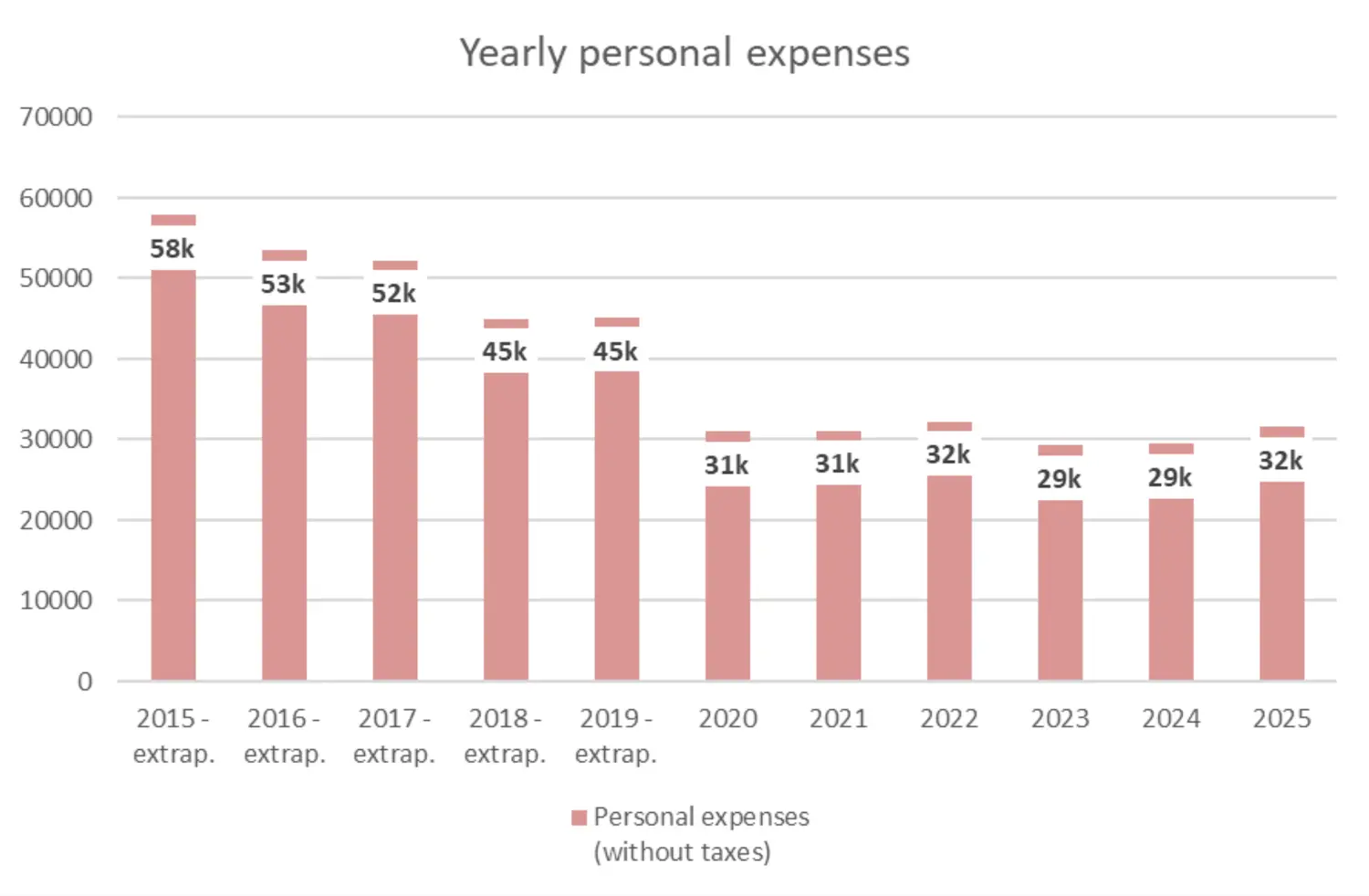
In the end, my monthly spending kept going down, then stabilized from 2020 on. Roughly half of that stability probably comes from changes in behavior (fewer nights out, fewer gadgets, fewer expensive purchases), while the rest comes from sharing costs (rent) and from optimizing certain expenses, food in particular.
Today, mandatory charges (taxes and health insurance premiums) make up a bit more than 50% of my spending. Around 35% then goes to our joint account, which covers rent, food, holidays and restaurant outings together.
The rest is spread fairly evenly across nights out with friends, work meals, public transport, gifts and other specific personal expenses.
These days, I see money spent as money that can no longer be invested.
That shift in perspective also encourages conscious spending, meaning spending that meets a need, but above all that increases my happiness.
The way we see it, the point of frugality isn’t to obsess over saving at any cost. It’s about consciously choosing how to allocate limited resources, which are hard to earn, toward things that increase our satisfaction and our happiness, individually and together.
Frugality isn’t an end in itself, it’s a means to be free.
Free to do what, exactly? That’s still an open question for us.
CHF 2.5 million targeted, but no retirement date
I’m going for financial independence so I don’t depend on a salary, and so I widen the freedom of my choices.
“The money you have is the instrument of freedom, the money you chase after is the instrument of servitude”. That quote from Rousseau has always inspired me.
At this stage, we still don’t know whether we’ll retire early once we hit our FIRE target.
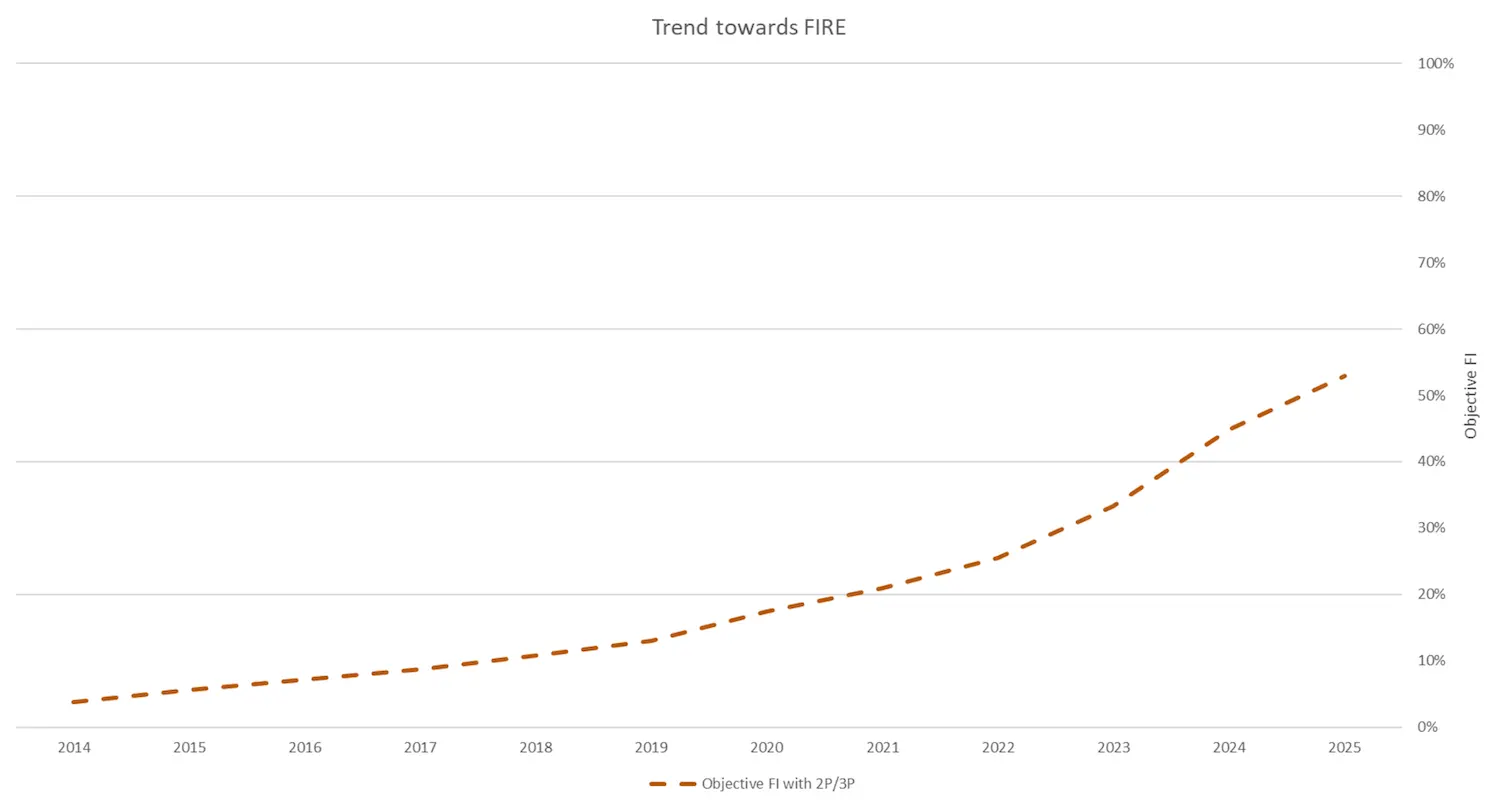
Right now we’re aiming for CHF 2.5 million freely invested within 10 years, which would let us withdraw CHF 100'000 a year according to the 4% rule. The “when” of early retirement is still an open question, though.
We simply want to be genuinely free from the moment we stop working, so we can take up new training or other activities. And free to respond flexibly to whatever life throws at us, around children or our parents for instance.
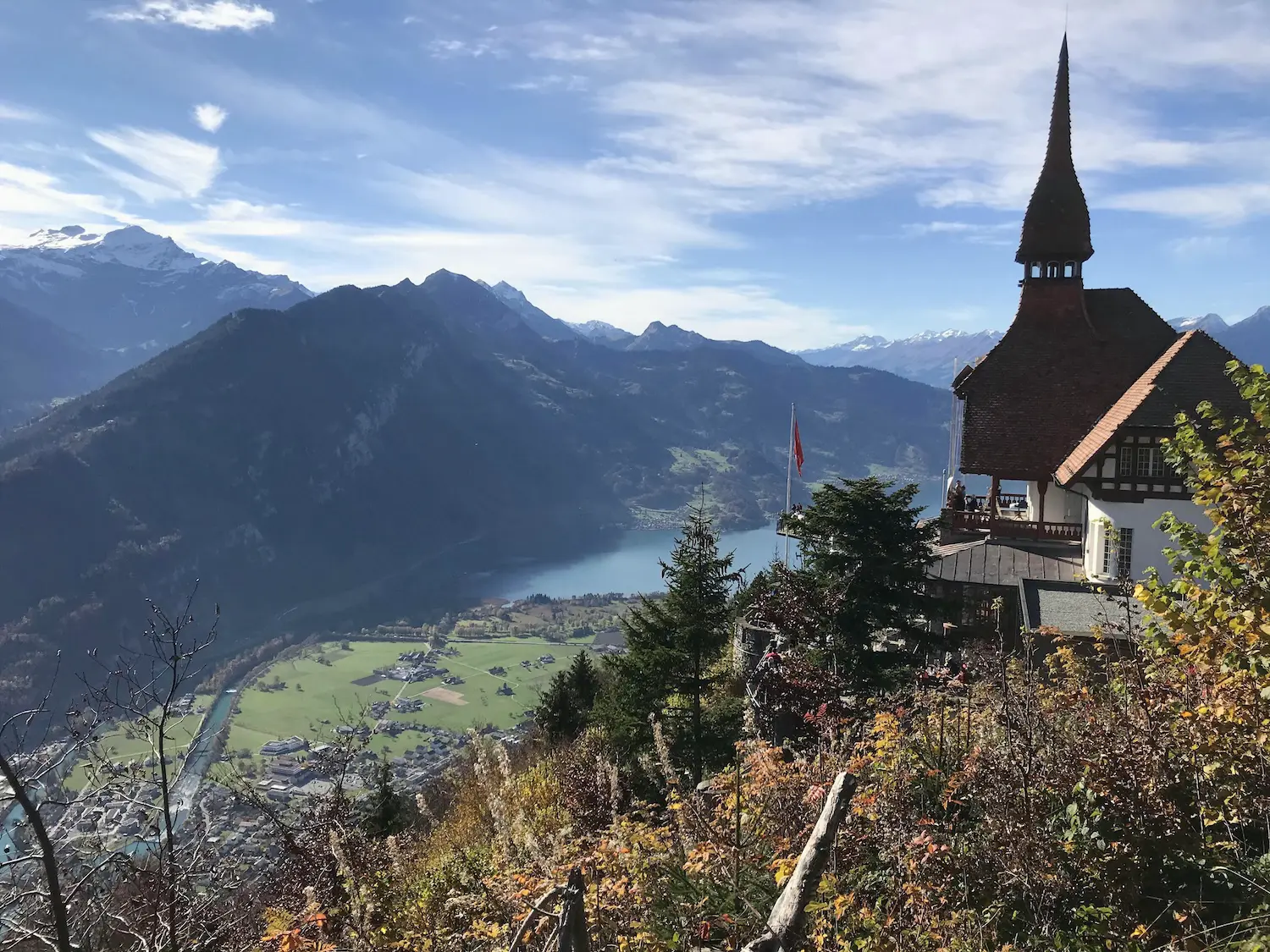
Interlaken seen from the top of Harder Kulm: the kind of day you treat yourself to when you have time
That said, we have no firm intention of stopping paid work as soon as we’re financially independent.
As things stand, it’s more likely that we’ll keep doing paid work, which gives us a certain personal and professional satisfaction, at least into our fifties.
It’s still not out of the question that one of us decides later on to go back to studying or to develop a passion for a while.
A few months ago, I launched a training offer on investing, with personalized one-on-one support to get started calmly. The goal is to share what I know and to help people put a durable passive investing strategy in place. The positive feedback encourages me to continue on this path.
Down the line, I’m thinking of broadening that offer around managing your own finances (analyzing and optimizing spending, budgeting).
I’m also considering cutting my working time by 20% if we have a child. Otherwise, I’ll seriously look at that option either at 40, or as soon as the dividends I collect reach 20% of my income.
The whole point of being financially independent is having that freedom and that security, not being forced to use them.
The modern lifestyles we all know reinforce that goal, especially through the demands of working life and how hard it is to balance private and professional life, particularly with children.
New technology speeds up communication across countless platforms, creating a state of permanent reachability that raises our stress levels considerably. I’ve lost count of the colleagues who, years before retirement age, were already telling me they couldn’t wait for it. The reason? The stress they were under, and a lack of meaning in their daily tasks and in their organization’s strategic direction.
Buying an apartment without pulling out your own capital
Today, moving toward financial independence, and controlling my spending in particular, happens automatically and takes no effort. Frugality is a lifestyle we chose consciously, one that makes us happy today and that will increase our freedom in the future.
That freedom is taking shape in our search for a property, so we can start a family in the best conditions.
Wanting to buy isn’t obvious for me, since markets have historically returned more than bricks and mortar in Switzerland. I’ve always looked at buying property objectively, without any particular emotional attachment. It’s by digging into the real estate side that I became aware you can buy a home while avoiding having to use capital that could otherwise be invested and offer a higher expected return.
Pledging second pillar and third pillar funds lets you avoid withdrawing your pension capital, and use it as collateral for a mortgage instead. Worth noting: at least 10% of the purchase price has to come from equity other than the second pillar in any case. Those funds then keep earning interest every year, instead of being tied up in a property purchase and subject to capital withdrawal tax. This solution works well when interest rates are low, and it can be adjusted later if the return on that capital, on the second pillar in particular, drops below the cost of the mortgage.
Here too we’ll stay frugal, going for a property that meets our objective needs and our lifestyle, rather than passing or superficial wishes.
The end of the imputed rental value in January 2029 has however made a new or fully renovated property more attractive, and pushed up the budget we’d initially planned. So we’re currently finalizing the purchase of a 4-room apartment, 105 m², less than 15 minutes by public transport from Bern station. That choice answers considerations around commuting, and our wish to give a possible child, with a mixed cultural heritage, the chance to grow up in a multicultural environment.
My advice to my 20-year-old self
The advice I’d give today to the person I was at 20 would be:
For money to become the instrument of your freedom, get interested in investing as early as you can. It’s simple, despite how complicated it looks.



Last updated: August 20, 2026